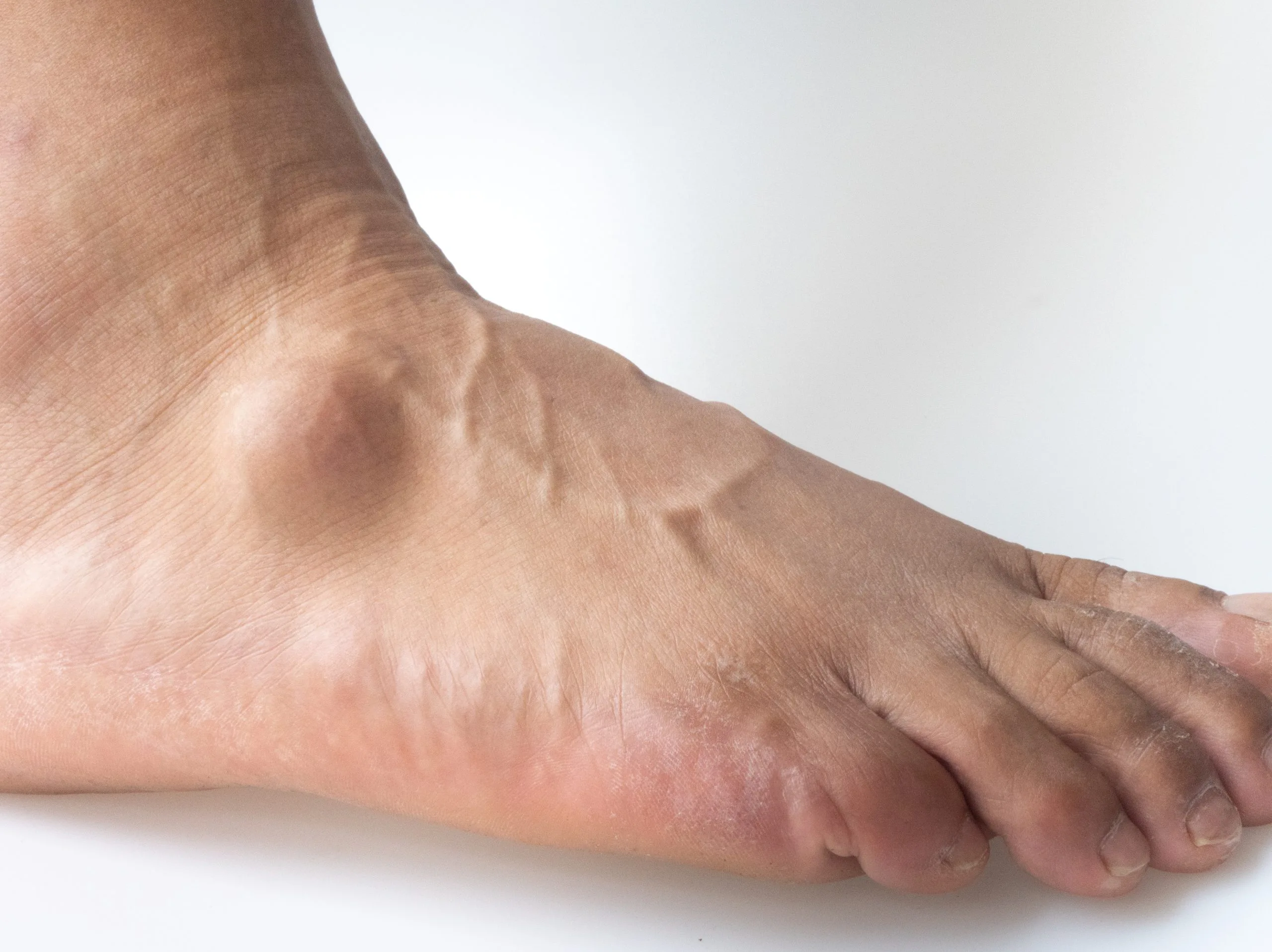
You should see a podiatrist for a ganglion cyst on your foot when the lump causes pain, changes in size, interferes with walking, or makes it difficult to wear shoes comfortably. Understanding when to see a doctor for a ganglion cyst on the foot can help you avoid unnecessary discomfort and get back on your feet faster.
Here’s what you need to know about ganglion cysts and when they require medical attention.
A ganglion cyst is a noncancerous (benign) fluid-filled sac that develops along a tendon or joint on the foot or ankle. The cyst contains a thick, jelly-like fluid called synovial fluid – the same lubricating substance that naturally cushions your joints. Ganglion cysts are the most common type of soft tissue lump found on the foot.
These cysts can appear on the top of the foot, along the side of the ankle, or near the toes. They typically feel firm or slightly spongy to the touch and can range from pea-sized to over an inch in diameter. The size can fluctuate – growing larger with increased activity and shrinking with rest. Some remain stable for months or years, while others disappear temporarily before returning.
Despite their sometimes alarming appearance, ganglion cysts are benign and do not spread to other parts of the body. However, their location on the foot means they can press against nerves, tendons, or bones – creating problems that go well beyond cosmetics.
Not every ganglion cyst produces symptoms. Some people notice a visible lump but feel no discomfort at all. When symptoms do occur, they often include:
A noticeable bump – usually round or oval, located near a joint or tendon on the foot; it may feel soft or firm to the touch
Size fluctuation – the cyst can change in size, sometimes over the course of a single day
Pain or aching – especially when the cyst presses against a nearby nerve or has been present for a long time
Tingling, numbness, or burning – caused by nerve compression, similar to symptoms seen in peripheral neuropathy
Difficulty wearing shoes – the cyst may rub against footwear, causing irritation, friction, and pressure
Changes during activity – the cyst may enlarge with repetitive motion and shrink with rest
Symptoms tend to worsen with activities that place stress on the affected joint, such as walking, running, or standing for extended periods.
While some ganglion cysts are harmless and manageable with observation, certain situations call for a prompt visit to a podiatrist:
The cyst is painful or growing. Any lump that increases in size or causes discomfort – whether constant or only with activity – should be evaluated.
You feel numbness, tingling, or burning. This indicates the cyst may be compressing a nerve and could lead to longer-term nerve issues if not addressed.
Walking becomes difficult. A cyst on the top of the foot or near the ankle can alter your gait, potentially leading to secondary problems like heel pain or plantar fasciitis.
Shoes no longer fit comfortably. Persistent friction from footwear can cause skin breakdown, blisters, or infection over the cyst.
The lump appeared suddenly after an injury. Post-injury lumps need professional evaluation to rule out fractures, torn tendons, or other structural damage.
Rapid changes in appearance. If the lump changes color, or the skin over it becomes red, warm, or broken, seek medical attention.
You’re unsure what the lump is. Only a trained podiatrist can differentiate a ganglion cyst from other conditions such as plantar warts, neuromas, lipomas, or more serious growths.
Ganglion cysts are not cancerous and do not spread to other parts of the body. In that sense, they are not dangerous. However, calling them harmless overlooks the real impact they can have on your daily life. A cyst pressing on a nerve can cause chronic pain. A cyst on the top of the foot can make every pair of shoes uncomfortable. And compensating for cyst-related pain by changing how you walk can cause problems in your ankles, knees, and hips over time. Only a trained medical professional can definitively identify a lump as a ganglion cyst and rule out other possibilities.
Many ganglion cysts resolve on their own without treatment. However, when a cyst does not go away – or continues to grow – leaving it untreated can lead to:
Increasing pain and nerve compression
Difficulty with mobility and exercise
Skin irritation or breakdown from shoe pressure
Altered walking patterns that stress other joints
Anxiety about an undiagnosed lump
If you’ve been watching and waiting for several weeks and the cyst hasn’t improved – or has gotten worse – it’s time to schedule an evaluation.
A podiatrist will typically:
Review your medical history – ask about your symptoms, how long the lump has been present, and if you’ve had any recent injuries to your foot
Perform a physical examination – assess the lump’s location, size, shape, texture, tenderness, and whether it moves under the skin
Transillumination – shine a bright light through the lump to confirm it is fluid-filled rather than solid
Imaging studies – X-rays can rule out bone-related issues; ultrasound is excellent for visualizing soft-tissue lumps; MRI provides highly detailed images for complex cases; computed tomography may be used for thorough evaluations
Aspiration – drawing fluid from the lump with a needle helps confirm the diagnosis and can provide immediate relief
Once a definitive diagnosis is made, your podiatrist will discuss the course of action. Treatment is only necessary if the cyst is causing problems.
Many ganglion cysts respond well to conservative treatment, especially when caught early. It’s important to note that you should never attempt to “pop” or drain a ganglion cyst yourself. Home remedies, such as hitting the cyst with a heavy object, can cause serious injury to the tendons, nerves, or bones in your foot.
Professional non-surgical options include:
Observation – small, painless cysts may simply be monitored over time
Shoe modifications – switching to wider or more accommodating footwear that avoids direct pressure on the cyst can reduce irritation significantly
Padding – cushioning the area around the cyst protects it from shoe friction
Custom orthotics – for cysts that alter your walking pattern, custom orthotics can redistribute pressure across the foot and relieve discomfort
Aspiration – a podiatrist drains the fluid from the cyst using a needle, often providing immediate symptom relief; however, aspiration does not remove the root of the cyst, so there is a higher rate of recurrence
Immobilization – in some cases, limiting joint movement temporarily helps the cyst shrink
Surgery is typically recommended when non-surgical treatments fail to provide relief or if the cyst causes severe, persistent symptoms. Your podiatrist may suggest surgical excision if you experience chronic pain, significant nerve compression (numbness or weakness), or if the cyst repeatedly returns after aspiration. The procedure involves removing the entire cyst wall along with the stalk that attaches it to the joint or tendon. This approach has a much lower recurrence rate than simple drainage and is highly effective at resolving symptoms permanently.
If you notice a lump on your foot, take these steps:
Don’t panic. Most foot lumps are benign, but they still warrant professional evaluation.
Avoid self-treatment. Do not try to drain, squeeze, or smash the cyst at home.
Monitor symptoms. Note whether the lump changes in size, causes pain, or affects your ability to walk.
Wear comfortable shoes. Choose footwear that minimizes pressure on the affected area until your appointment.
Schedule an appointment. Call Foot Healthcare Associates at (248) 258-0001 to have the lump examined. New patients should call the office to register and schedule an appointment.
A ganglion cyst on your foot may be harmless – or it may be the source of real pain and mobility problems. The key is recognizing the signs that tell you it’s time to seek professional care: persistent or worsening pain, numbness, changes in size, and difficulty walking or wearing shoes. An accurate diagnosis from a qualified podiatrist is essential to rule out more serious conditions and determine the path forward.
If you have a suspicious bump on your foot, call (248) 258-0001 to schedule your evaluation.

Don’t let foot and ankle pain keep you from living your best life.
June 18, 2026