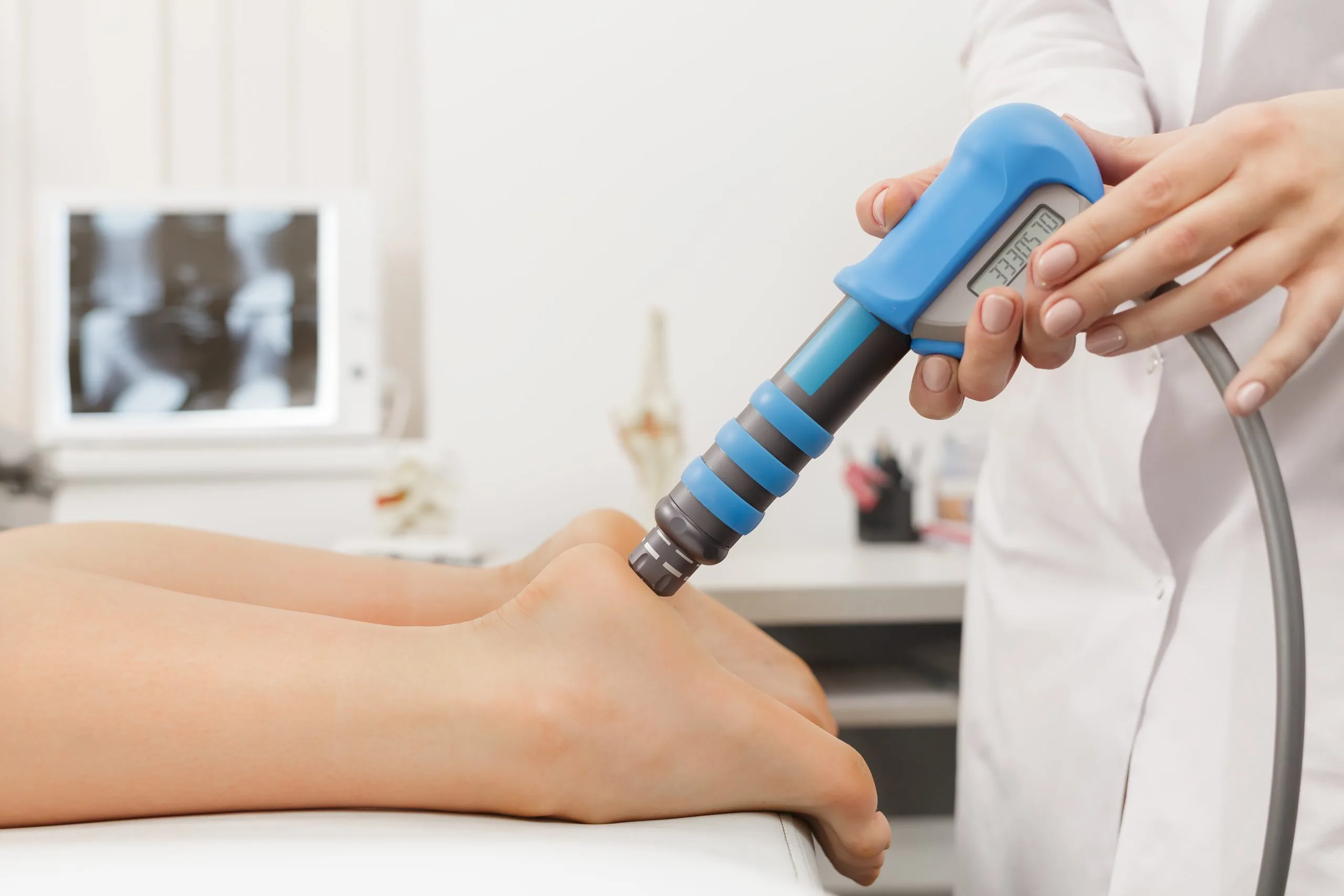
Yes, shockwave therapy is highly beneficial for many patients with chronic plantar fasciitis, especially when other conservative treatments have failed. This non-invasive treatment stimulates your body’s natural healing process and can provide lasting relief from persistent heel pain. It is particularly effective for people who have experienced symptoms for several months and are looking to avoid more invasive treatment options, such as surgery or injections.
Plantar fasciitis is a common cause of heel pain, resulting from irritation and inflammation of the plantar fascia – the thick band of tissue connecting your heel bone to your toes. This often leads to stabbing pain, especially with your first steps in the morning.
During shockwave therapy, a handheld device delivers targeted acoustic waves through the skin to the inflamed plantar fascia, creating controlled “microtrauma” that signals your body to repair itself.
This process accomplishes several important things:
Stimulates Blood Flow: Encourages the formation of new blood vessels (neovascularization), bringing more oxygen and nutrients to the injured area.
Breaks Down Scar Tissue: Helps break down scar tissue and calcifications that impede healing and flexibility.
Promotes a Healing Cascade: Triggers the release of natural growth factors and stem cells, accelerating tissue repair and regeneration.
Reduces Pain Signals: Can have an analgesic effect by over-stimulating pain nerves, diminishing their activity.
Shockwave therapy is typically reserved for patients with chronic plantar fasciitis, generally defined as pain persisting for six months or longer.
It may be recommended if you have:
Tried conservative treatments like stretching, icing, physical therapy, supportive shoes, and custom orthotics without success.
Persistent heel pain for several months or longer that limits your work, exercise, or daily activities.
A desire to avoid or delay more invasive options like steroid injections or surgery.
Clinical evidence and our experience at Foot Healthcare Associates show that shockwave therapy is highly effective for chronic plantar fasciitis, with numerous studies demonstrating success rates of 80% or higher in reducing pain and improving function.
Because it works by encouraging your body to heal itself, the benefits often build gradually over several weeks. Patients frequently report a significant decrease in morning pain, greater ability to stand or walk, and a return to activities they had to give up. Some may need to combine shockwave with other approaches, such as custom orthotics or stretching, which is why an individualized plan matters.
Like any medical procedure, it’s important to weigh the advantages and potential downsides.
Pros:
Non-Invasive: No needles, incisions, or anesthesia involved.
No Downtime: You can resume most of your regular routine immediately.
High Success Rate: Proven effective for chronic conditions that haven’t responded to other treatments.
Targets the Root Problem: Promotes genuine tissue healing rather than just masking pain.
Cons:
Not Instant: Improvement builds over weeks, not overnight, and can include temporary soreness.
Multiple Sessions Needed: A series of treatments (typically 3-5) is usually required for optimal results.
Not an Initial Treatment: Reserved for chronic cases, not first-line care.
Requires a Diagnosis: Results vary, and it only helps when the pain is truly from plantar fasciitis or a related condition.
Shockwave therapy is one of many advanced tools available. Depending on your condition, these may be recommended alone or in combination:
Stretching and Rest: To relieve tension on the plantar fascia.
Supportive Footwear and Custom Orthotics: To correct biomechanical imbalances and reduce strain.
PRP Injections: Using your body’s own platelet-rich plasma to accelerate healing.
Amniotic Fluid Therapy: Injections that use regenerative properties to reduce inflammation and repair tissue.
Laser Therapy: A different energy-based treatment to reduce pain and inflammation.
Cortisone Injections: To calm severe inflammation.
Foot & Ankle Surgery: Considered only in the most severe and unresponsive cases.
So, is shockwave therapy for plantar fasciitis beneficial? For the right patient, the answer is yes. It offers a safe, non-invasive solution that promotes genuine healing and can provide lasting relief for those with chronic heel pain.
Call (248) 258-0001 to schedule your evaluation and take a step toward walking without pain.

Don’t let foot and ankle pain keep you from living your best life.
July 14, 2026