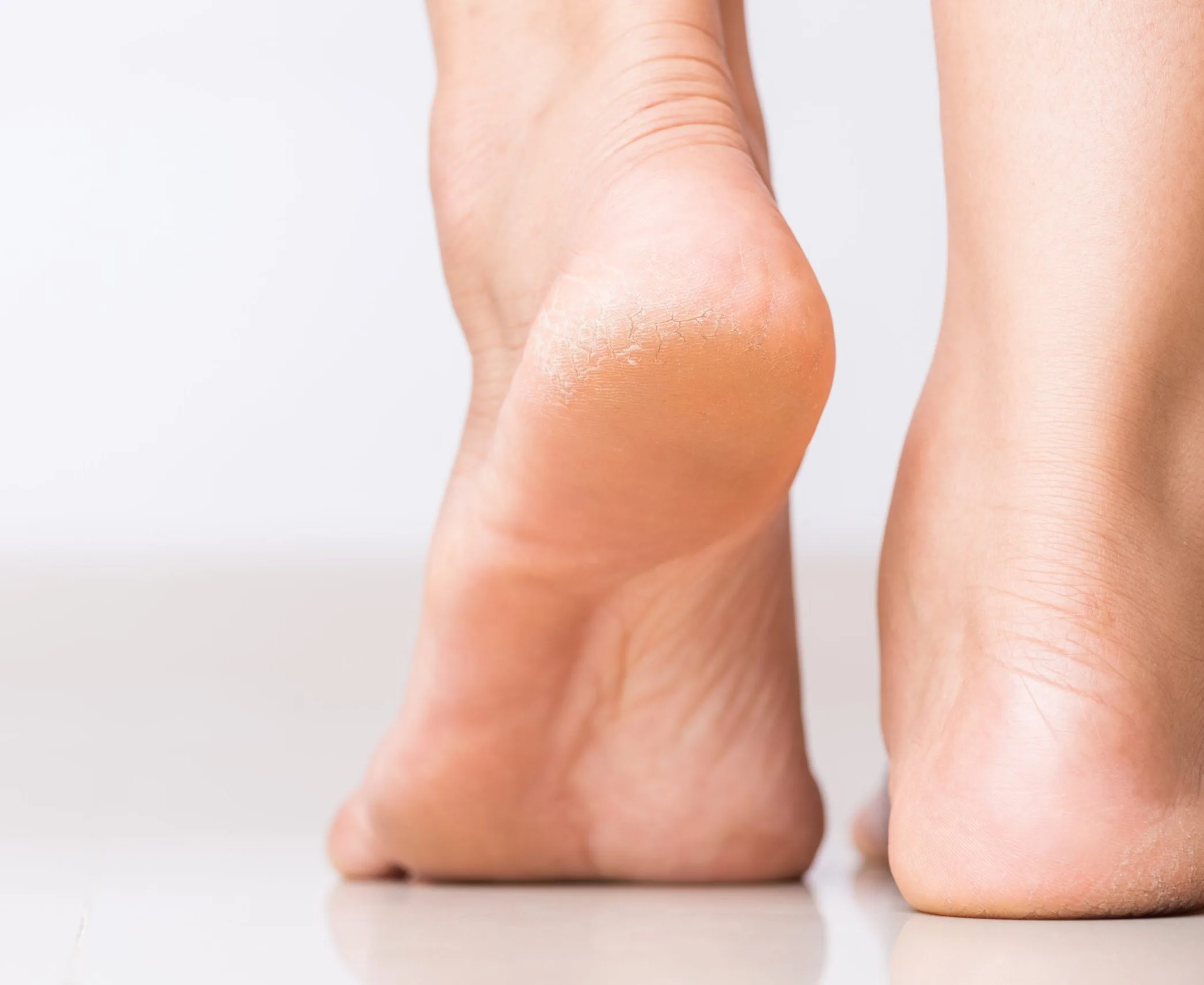
Soaking your feet in vinegar can soften the thick, dry skin that builds up on your heels, but vinegar alone will not heal cracked heels. Think of it as a prep step, not a cure. Used too often or too strong, the acid strips the skin’s natural oils and can leave heels drier and more irritated than before.
The real improvement comes from what you do next: gentle exfoliation, a thick moisturizer, and addressing whatever caused the dryness in the first place. If your heels are bleeding, painful, or you have diabetes, skip the home remedies and call a podiatrist.
Cracked heels – also called heel fissures – start with dry skin. The fat pad under your heel spreads outward every time you take a step. When the skin over that pad is dry and inflexible, it splits instead of stretching. The body responds by building more callus, which is even less flexible, and the cycle repeats.
Michigan weather doesn’t help. Dry indoor heat in winter pulls moisture out of the skin, and open-back sandals in summer let the heel pad spread with nothing to hold it in. Other contributing factors include:
Athlete’s foot and other fungal skin infections
Hot, long showers and harsh soaps that strip natural oils
Age – skin thins, produces less oil, and loses elasticity over time
Early on, you may only notice rough, flaky skin around the heel rim. As it progresses, you might see:
Thick yellow, white, or brown callus along the outer heel
Flaky or peeling skin
Fine cracks that deepen into visible vertical splits
Itching or a tight, stretched feeling
Pain when walking or standing
Bleeding or discharge from deep fissures
Redness, warmth, or drainage – signs of infection that need same-week attention
Vinegar is a weak acid – mostly acetic acid. Acids loosen the bonds holding dead skin cells together, similar in principle to the alpha hydroxy acids found in skincare products. That’s the logic behind the remedy: dissolve the “glue” in the callus so it sloughs off more easily.
Vinegar also has mild antiseptic and antifungal properties, which is why people reach for it when feet smell or itch.
A vinegar soak may realistically help you:
Soften hardened callus before filing with a pumice stone
Reduce foot odor by lowering surface bacteria
Address mild fungal contributors to the skin issue
Make moisturizer work better by clearing away dead surface skin
What it won’t do: rebuild the skin barrier, restore lost moisture, or fix the pressure and footwear problems causing the cracks.
If you have mild dry skin and want to try a soak, use caution. This is not for anyone with diabetes, nerve damage, or open, bleeding cracks.
Fill a basin with warm – not hot – water.
Add one part vinegar to two parts water.
Soak for 10 to 15 minutes only. Longer soaks over-soften and draw moisture out of the skin.
Rinse with clean water and pat completely dry, especially between the toes.
Gently file the softened callus with a pumice stone or foot file. Light pressure, a few passes, no more – don’t try to remove it all at once.
Apply a thick heel balm containing urea, lactic acid, or salicylic acid.
Put on cotton socks to seal in the moisture.
Apple cider vinegar and white vinegar have similar acetic acid content, so neither is meaningfully more effective – there is no clinical evidence favoring one over the other for foot care. ACV is simply more popular in home remedies. Both should always be diluted; never apply undiluted vinegar to skin.
Do not soak if you have diabetes or poor circulation without asking your podiatrist first. Reduced sensation makes it easy to burn or over-file without feeling it.
Never soak open, bleeding fissures or infected skin.
Skip vinegar entirely if you have eczema, psoriasis, or an active athlete’s foot flare-up.
Stop immediately if you feel burning, stinging, or irritation.
Avoid razor-style callus shavers. Cutting into a callus at home is one of the most common ways patients end up with an infection.
Always moisturize afterward. Skipping this step leaves skin drier than before.
Limit soaks to two or three times a week.
Urea cream (20–40%) applied nightly – the single most effective at-home product for thick heel callus
Creams with salicylic acid or alpha-hydroxy acid, which exfoliate while hydrating
Petroleum jelly plus cotton socks overnight for occlusive therapy
Gentle exfoliation with a pumice stone or foot file after a shower
Closed-back shoes with cushioning, especially if you stand all day
Silicone heel cups to reduce heel pad spread
Drinking enough water and running a humidifier in winter
Home care has limits. Make an appointment if:
The cracks are deep, bleeding, or painful enough to change how you walk
You see redness, swelling, warmth, pus, or a foul odor
You have diabetes, peripheral neuropathy, or poor circulation
The problem doesn’t improve after a week of diligent home care
Callus keeps returning within weeks no matter what you do
Over-the-counter creams haven’t helped after a month
If pressure distribution is driving the callus, custom orthotics can offload the heel and stop the cycle.
Foot Healthcare Associates sees patients in Novi, Bingham Farms, Livonia, and Howell.
Call (248) 258-0001 to register and schedule.
So, does soaking your feet in vinegar help cracked heels? It can soften callus and reduce odor, making it a reasonable first step – but it doesn’t heal fissures on its own and can dry skin further if you skip the moisturizer. Diluted soaks, gentle filing, and a urea-based cream work well for mild dryness.
Deep, painful, or bleeding cracks – and any heel problem in a patient with diabetes – need a podiatrist, not a pantry remedy.

Don’t let foot and ankle pain keep you from living your best life.
August 8, 2026