
Cortisone injections usually bring faster short-term relief from heel pain, while shockwave therapy works more slowly but often produces longer-lasting results by helping damaged tissue heal. A cortisone shot calms inflammation within days and can be a good fit when pain is sharp and recent. Shockwave therapy stimulates repair in tissue that has stayed injured for months and is often a better fit for chronic heel pain that has not responded to other care. Many patients do well with one, the other, or both at different stages of recovery. The right choice depends on what is causing your pain, how long you have had it, your overall health, and how quickly you need relief.
This guide compares cortisone injections vs. shockwave therapy for heel pain in plain terms. It covers how each treatment works, what results to expect, how much downtime each requires, and which patients tend to benefit most. Our board-certified podiatrists offer both treatments at our offices in Novi, Howell, and Livonia. We see heel pain every day, and the goal of this article is to help you walk into your visit with a clear picture of your options.
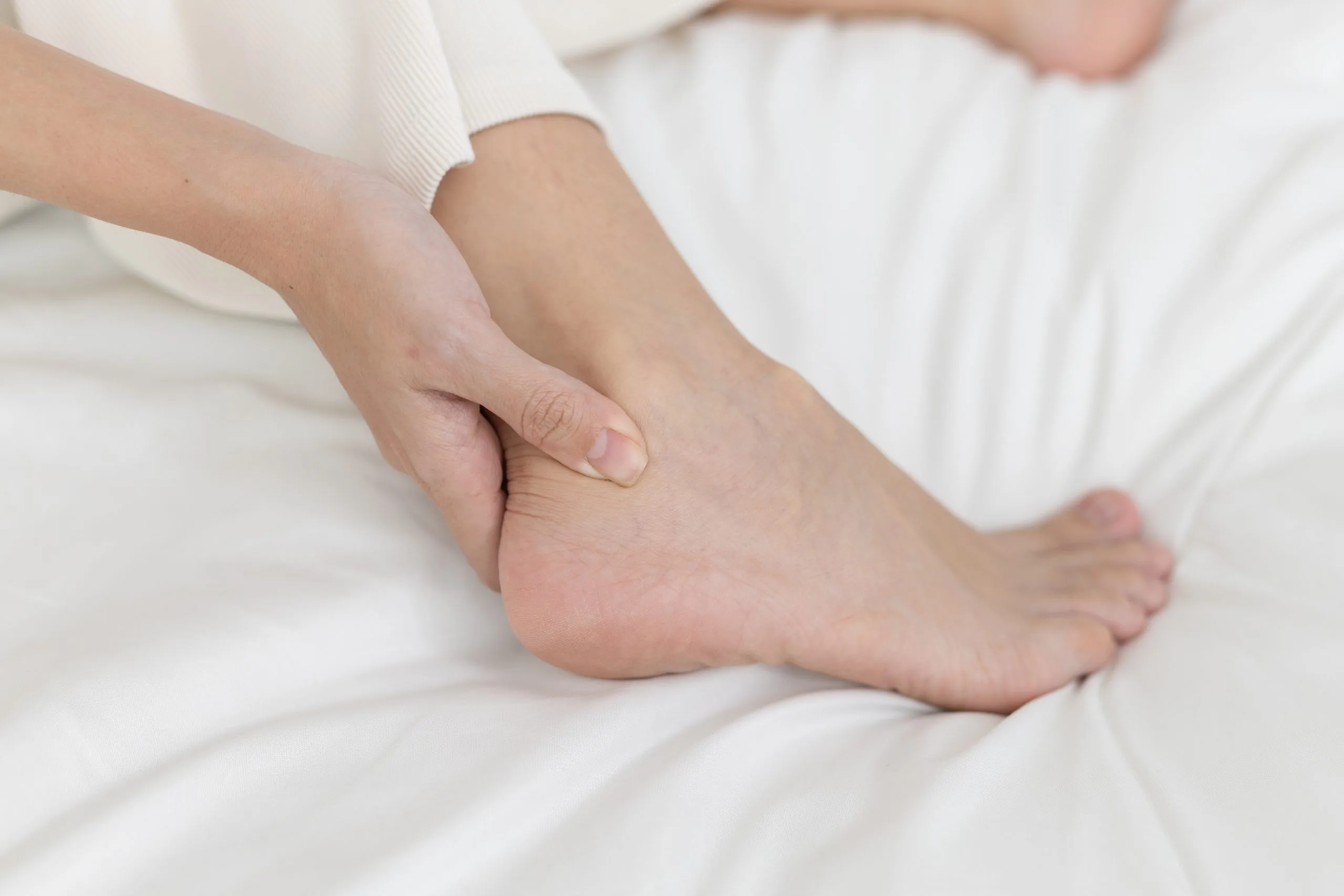
Heel pain is one of the most common reasons patients visit a podiatrist. The heel takes the full force of your body weight with every step, and that force can climb to several times your body weight when you run or jump. Over time, this repeated stress can irritate the tissues, bones, and nerves in and around the heel.
Heel pain is a symptom, not a diagnosis. Two people with the same sore heel can have very different problems underneath. That is why an accurate diagnosis comes before any treatment decision, including the choice between cortisone and shockwave therapy.
Plantar fasciitis. This is the most frequent cause of heel pain in adults. The plantar fascia is a thick band of tissue that runs along the bottom of the foot from the heel bone to the toes. It supports your arch and absorbs shock. When it becomes strained or overloaded, small tears and irritation form where it attaches to the heel. The classic sign is sharp pain with the first steps in the morning or after sitting for a while. You can read more on our Plantar fasciitis.
When plantar fasciitis lasts for many months, the problem often shifts. The tissue can become thickened and worn rather than actively inflamed. Doctors sometimes call this stage plantar fasciosis. This change matters when choosing a treatment, because a therapy that targets inflammation may help less once the tissue has entered this chronic, degenerative stage.
Heel spurs. A heel spur is a small bony growth on the underside of the heel bone. Spurs often form in people who have had long-term plantar fascia strain. Many spurs cause no pain at all. When pain is present, it usually comes from the irritated soft tissue around the spur rather than the bone itself. Our Heel spur explains this condition in more detail.
Achilles tendinitis. Pain at the back of the heel often points to the Achilles tendon. This large tendon connects the calf muscles to the heel bone. Overuse, tight calves, and sudden increases in activity can irritate it. Our Achilles tendinitis page covers this condition. Achilles pain needs careful handling, and this has a direct effect on the cortisone versus shockwave decision.
Stress fractures. A small crack in the heel bone can develop from repeated impact. A stress fracture usually causes pain that worsens with activity and may be tender when the heel is squeezed.
Nerve irritation. Small nerves run along the inside and bottom of the heel. When they become pinched or irritated, patients may feel burning, tingling, or shooting pain. Nerve-related heel pain can feel similar to plantar fasciitis but responds to different care.
Fat pad thinning. A natural cushion of fat sits under the heel bone. With age, injury, or certain treatments, this pad can thin out. A thinner pad means less shock absorption and a bruised, aching feeling under the heel.
Arthritis and systemic conditions. Some forms of arthritis and inflammatory conditions can affect the heel. Gout and other inflammatory problems may also cause heel pain in some patients.
Heel pain in children. Active kids, especially those in growth spurts, can develop pain where the Achilles tendon attaches to the growth plate of the heel. This condition is treated differently from adult heel pain. Our Pediatric care page has more on how we approach foot problems in growing children. These include flat feet or high arches, tight calf muscles, long hours standing on hard surfaces, sudden increases in exercise, extra body weight, and shoes with poor support.
Heel pain rarely stays a minor problem for long. It tends to shape how you move through the day.
Mornings are often the hardest part. Many patients describe limping to the bathroom or holding onto furniture until the heel loosens up. Pain can return after sitting through a meeting, a car ride, or a movie.
Work can become a challenge. Nurses, teachers, retail workers, and factory workers spend hours on their feet. For them, heel pain can mean shorter shifts, missed days, or pushing through pain that gets worse by evening.
Exercise often drops off. Walkers, runners, and gym regulars may stop their routines to avoid the pain. Less activity can lead to weight gain and lost fitness, which can place even more stress on the heel.
Heel pain also changes the way you walk. People shift their weight to the outside of the foot or favor the other leg. Over weeks and months, this altered gait can cause new pain in the knees, hips, or lower back.
Sleep and mood can suffer too. Chronic pain wears on people, and the frustration of a problem that does not go away is real. The good news is that heel pain is highly treatable. Most patients improve with the right combination of care, and the choice between treatments such as cortisone and shockwave therapy plays a central role in that plan.
Heel pain treatment usually follows a step-by-step approach. Simpler measures come first. More involved treatments are added when pain does not improve or when the condition has already become chronic.
Home care and activity changes. Rest from high-impact activity, regular calf and plantar fascia stretching, ice after activity, and supportive footwear form the base of most treatment plans. Many early cases improve with these steps alone.
Taping and bracing. Supportive taping and bracing can take strain off the plantar fascia during healing. Our team has published instructions for applying TriLok, shown in the video below.
Custom orthotics. Prescription orthotics are made to fit the shape of your foot. They support the arch, spread pressure more evenly, and reduce strain on the heel. We offer custom orthotics as part of heel pain care.
Cortisone injections. A cortisone shot places a strong anti-inflammatory medicine directly into the painful area. It can calm pain quickly and help patients get moving again while other treatments take effect.
Shockwave therapy. This treatment uses sound waves to stimulate healing in tissue that has been injured for a long time. Our offices use third-generation shockwave therapy for chronic heel pain.
Regenerative injections. We also offer PRP injections and amniotic fluid therapy. These treatments aim to support the body’s natural repair process in damaged tissue.
Laser therapy. Our offices offer laser therapy for pain as another non-surgical option.
Imaging. When the cause of heel pain is unclear, imaging helps guide treatment. Our practice offers computed tomography for detailed views of bone structure.
Surgery. A small number of patients still have pain after months of thorough non-surgical care. For these patients, our foot and ankle surgeons may discuss surgical options, including tenotomy.
Cortisone injections and shockwave therapy sit in the middle of this range. They are more involved than stretching and footwear changes but far less involved than surgery. That is why patients so often ask us to compare the two.
Cortisone is a type of corticosteroid. It is a man-made version of cortisol, a hormone your adrenal glands make naturally. Cortisol helps the body manage stress and control inflammation. Injected cortisone works the same way but in a much stronger, concentrated dose aimed at one spot.

A cortisone injection for heel pain delivers the medicine near the painful tissue, most often where the plantar fascia attaches to the heel bone. The shot usually combines cortisone with a local anesthetic. The anesthetic numbs the area for a short time, and the cortisone takes over as the anesthetic wears off.
Cortisone injections have been used in foot care for decades. They remain one of the most familiar treatments for heel pain because they often work quickly.
Inflammation is the body’s natural response to injury. Blood flow increases, fluid builds up, and chemical signals tell nerves to send pain messages. In the short term, this response protects the injured area. When inflammation lingers, it causes ongoing swelling, stiffness, and pain.
Cortisone interrupts this process. It reduces the release of the chemicals that drive inflammation, which lowers swelling and calms irritated nerve endings. As inflammation settles, pain usually drops.
Cortisone does not repair torn or worn tissue. It quiets the inflammation around the problem. This is the key point to understand when comparing it with shockwave therapy. If inflammation is the main source of pain, cortisone can work very well. If the tissue has already become thickened and degenerated, cortisone may provide only partial or short-lived relief.
Many patients notice the numbing effect right away. The cortisone itself often starts working within a few days, with the full effect usually felt within one to two weeks.
Fast relief. Speed is the main advantage of cortisone. Many patients feel a clear improvement within days. For someone who can barely walk in the morning, that change can feel dramatic.
A short treatment visit. A cortisone injection is done during an office visit and takes only a few minutes. Most patients walk out on their own.
Targeted treatment. The medicine goes directly where it is needed. This allows a strong local effect with less impact on the rest of the body compared with taking steroids by mouth.
A window for other treatments. Pain relief from cortisone can make it easier to stretch, wear orthotics, and stay active. In this way, cortisone often acts as a bridge. It lowers pain long enough for the treatments that address the root cause to do their work.
Helpful for sudden flare-ups. Cortisone is often a good fit for a recent, intense flare of plantar fasciitis where inflammation is clearly the main problem.
Useful in diagnosis. If an injection brings strong relief, that response can help confirm where the pain is coming from. If it brings little relief, that can point our providers toward a different cause.** Some patients feel more pain for a day or two after the shot. This is called a cortisone flare. It usually settles on its own with rest and ice.
Fat pad thinning. Repeated cortisone injections in the heel can thin the natural fat pad that cushions the heel bone. A thinner fat pad can lead to a new, lasting kind of heel pain that is harder to treat.
Weakening of the plantar fascia. Cortisone can weaken connective tissue over time. In rare cases, repeated injections have been linked to rupture of the plantar fascia. A rupture can change the shape of the arch and cause long-term problems.
Skin changes. Lightening of the skin or a small dent at the injection site can occur, especially in people with darker skin tones.
Higher blood sugar. Cortisone can raise blood sugar for several days after an injection. This is an important concern for patients with diabetes. Those patients should watch their levels closely and let our team know about their diabetes before any injection. Our diabetic foot page explains why foot care for people with diabetes requires extra attention.
Infection. Redness, warmth, increasing swelling, or fever after an injection should be reported right away.
Temporary relief. Relief often fades over time, sometimes within weeks.
Caution near the Achilles tendon. For this reason, cortisone is generally avoided for Achilles tendon problems.
Shockwave therapy, also called extracorporeal shockwave therapy or ESWT, is a non-invasive treatment that uses sound waves to stimulate healing. “Extracorporeal” means “outside the body.” There are no needles, no incisions, and no medicine placed in the foot.
A handheld device delivers pulses of acoustic energy through the skin into the injured tissue. Shockwave therapy was first developed in medicine to break up kidney stones. Over time, doctors found that lower-energy sound waves could also help chronic tendon and soft tissue injuries heal.
Our offices use third-generation shockwave technology for heel pain. Shockwave therapy is one of the main non-surgical options our team uses for chronic plantar fasciitis, heel pain with spurs, and Achilles tendon problems.
Chronic heel pain often lasts because the body has stopped trying to heal the injured tissue. Blood flow to the area may be limited. The tissue may be thick, scarred, and stuck in a cycle of breakdown without repair.
Shockwave therapy works by restarting that healing process. The sound waves create a controlled stimulus in the tissue, and the body responds in several ways.
Better blood flow. Shockwaves encourage the growth of new small blood vessels in the treated area. More blood flow brings more oxygen and nutrients, which tissue needs to repair itself.
Tissue repair. The treatment prompts the body to send repair cells to the area and to build new collagen. Collagen is the main building block of the plantar fascia and tendons.
Breakdown of scar tissue and calcium. Sound waves can help loosen thickened scar tissue. In some cases, they may help break down calcium deposits in soft tissue.
Reduced pain signals. Shockwave therapy affects the nerve endings in the treated area. This can reduce pain signaling, which is one reason some patients notice relief even before the tissue fully heals.
This is the core difference from cortisone. Cortisone calms inflammation. Shockwave therapy aims to heal the tissue itself. That is why shockwave therapy is often a strong fit for long-lasting heel pain, where the tissue has worn down rather than simply become inflamed.
Shockwave therapy is usually given as a series of sessions spaced over several weeks. The exact number depends on the condition and how the patient responds.
No needles or medicine. Shockwave therapy is non-invasive. Nothing is injected, and no medicine enters the body. This makes it appealing to patients who dislike needles or who want to avoid steroids.
Addresses the root problem. By stimulating repair, shockwave therapy targets the damaged tissue that keeps chronic heel pain going.
Longer-lasting results. When shockwave therapy works, the improvement tends to hold because the tissue has actually healed. Many patients report lasting relief long after the final session.
Little to no downtime. Most patients walk out of a session and return to normal daily activities the same day.
No harm to the fat pad.
No effect on blood sugar. Because no steroid is involved, shockwave therapy does not raise blood sugar. This can make it a helpful option for patients with diabetes.
Can be repeated. If symptoms return, shockwave therapy can usually be repeated without the cumulative concerns that come with multiple steroid injections.
May help patients avoid surgery. For patients with chronic heel pain who have tried many treatments, shockwave therapy offers another non-surgical path before surgery is considered.
Works for several conditions. Beyond plantar fasciitis, shockwave therapy can be used for heel pain with spurs and for Achilles tendon conditions, where cortisone is generally avoided.** Patients may feel tapping or pulsing that can be uncomfortable, especially over the most sensitive spot. The intensity can be adjusted during the session.
Soreness afterward. The treated area may ache for a day or two. Some patients describe it as feeling like a mild bruise.
Redness and swelling. Mild redness, swelling, or small skin bruising can appear at the treatment site and usually fades quickly.
Temporary tingling or numbness. A small number of patients notice brief tingling or numbness in the treated area.
Slower results. The main drawback is time. Shockwave therapy does not deliver the quick relief of a cortisone shot. Improvement builds gradually over weeks to months as the tissue heals.
Not right for everyone. Shockwave therapy is generally not used in certain situations. These include pregnancy, bleeding disorders, use of certain blood thinners, an active infection or open wound in the treatment area, tumors in the area, and over open growth plates in children. Patients with a pacemaker or certain nerve conditions should discuss this with our team. Your provider will review your health history before recommending shockwave therapy.
Both treatments can relieve heel pain. They do it in different ways, on different timelines, and for different types of patients. The sections below compare them side by side.
Cortisone and shockwave therapy are both effective, but they shine at different stages of heel pain.
Cortisone is strongest for recent, inflamed heel pain. When plantar fasciitis has started in the past few weeks or months and the tissue is clearly inflamed, cortisone often brings strong and fast relief. It is also useful during a sudden flare when a patient needs to get back on their feet quickly.
Shockwave therapy is strongest for chronic heel pain. Once heel pain has lasted for several months, the tissue has often moved past simple inflammation. It may be thickened and degenerated. In this situation, calming inflammation is not enough. Shockwave therapy targets the tissue damage itself, which is why it is often recommended for patients who have had heel pain for six months or longer.
Cortisone may help less over time. Many patients find their first injection works well, but later injections give shorter or weaker relief. This often happens because the underlying tissue damage has not been repaired.
Shockwave therapy may help patients who have run out of options. Patients who have tried stretching, orthotics, footwear changes, and cortisone without lasting success often see meaningful improvement with shockwave therapy.
The type of heel pain matters. For heel pain caused by a stress fracture or nerve problem, neither treatment may be the main answer, which is why diagnosis comes first.
Put simply, cortisone is often the faster tool, and shockwave therapy is often the more lasting tool. The right one depends on the stage and cause of your heel pain.
How long relief lasts is one of the biggest differences between the two treatments.
Cortisone relief is usually temporary. Many patients feel better for several weeks to a few months. Some get longer relief, especially if they also stretch, wear supportive shoes, and use orthotics while the inflammation is down. Others notice pain returning within weeks. Because cortisone does not repair tissue, the original problem can resurface once the medicine wears off.
Shockwave results tend to last longer. Shockwave therapy works more slowly, but the improvement often holds because it comes from real tissue healing. Patients often notice gradual progress over several weeks after their sessions, with continued improvement for a few months afterward. Once the tissue has healed, relief can last well beyond the treatment period.
Both treatments last longer with good support. Neither treatment works in isolation. Results last longest when patients also address the factors that caused the heel pain. These include tight calves, poor footwear, foot structure problems, and sudden jumps in activity. Custom orthotics, stretching, and smart activity changes help protect the results of either treatment.
Repeat treatment differs. If heel pain returns after shockwave therapy, additional sessions can usually be done without the same concerns.
Both treatments allow most patients to return to normal life quickly. The details differ slightly.
After a cortisone injection. Most patients walk out of the office and resume light daily activities the same day. Providers often advise avoiding intense exercise, long runs, or extended time on the feet for a few days. This allows the medicine to settle and reduces strain on the tissue while it is temporarily weakened. Some patients have a short cortisone flare, which usually passes within 48 hours.
After shockwave therapy. Most patients return to work and daily routines right away. Mild soreness for a day or two is common. Providers often recommend avoiding high-impact activity such as running for a short period after each session so the healing response is not disrupted. Patients are also commonly advised to avoid ice and anti-inflammatory medicine after shockwave therapy, because these can blunt the healing response the treatment is designed to trigger. Your provider will give you specific guidance.
Number of visits. Cortisone is usually a single injection, with a follow-up visit to check progress. Shockwave therapy usually involves a series of sessions spread over several weeks. Patients choosing shockwave therapy should plan for several short visits.
Time to feel better. Cortisone usually brings relief within days. Shockwave therapy brings gradual relief over weeks to months. Patients who need fast relief for an upcoming event or demanding work schedule may lean toward cortisone. Patients focused on long-term healing may lean toward shockwave therapy.
Every patient brings a different health history, lifestyle, and set of goals. Here is how the two treatments tend to match different situations.
Patients with recent heel pain. If heel pain started recently and home care has not helped, cortisone may be offered to calm inflammation while other treatments begin.
Patients with long-term heel pain. For heel pain lasting six months or more, shockwave therapy is often a strong choice because it targets chronic tissue damage.
Patients who have already had cortisone. Patients who have had one or more injections with fading results are often good candidates for shockwave therapy.
Patients with diabetes. Because cortisone can raise blood sugar, shockwave therapy may be the preferred choice for many patients with diabetes. Patients who also have peripheral neuropathy need careful evaluation before either treatment, since reduced sensation can affect how heel pain is felt and managed.
Patients with Achilles tendon pain.
Patients who dislike needles or want to avoid steroids. Shockwave therapy offers a needle-free, medicine-free option.
Athletes and active adults. Athletes often want to return to training with the lowest chance of reinjury. Shockwave therapy avoids tissue weakening linked with repeated cortisone and supports lasting repair. Cortisone may still play a role for short-term relief in certain cases. Our Sports injuries page covers our approach to active patients.
Patients who need relief quickly. For patients with a demanding job, an upcoming trip, or severe pain that limits basic activities, cortisone may provide faster relief.
Patients who should not have shockwave therapy. Pregnancy, bleeding disorders, certain blood thinners, infection in the area, and open growth plates may rule out shockwave therapy. In these cases, other treatments are considered.
Children and teens. Heel pain in growing children is usually handled with conservative care. Neither cortisone nor shockwave therapy is typically a first-line treatment for young patients with open growth plates.
Combining treatments. Cortisone and shockwave therapy are not always an either-or choice. Some patients receive cortisone for short-term relief and later move to shockwave therapy if pain returns. Shockwave therapy is generally not performed over an area that has recently been injected, so your provider will plan the timing between the two carefully.
The decision between cortisone and shockwave therapy works as a shared decision between you and your podiatrist. The goal is a plan that fits your diagnosis, your health, and your daily life.
The cause of your heel pain. An accurate diagnosis comes first. Plantar fasciitis, heel spurs, Achilles problems, stress fractures, and nerve irritation each call for a different approach. Treating the wrong problem wastes time and can delay healing.
How long you have had pain. Recent pain driven by inflammation often responds well to cortisone. Pain that has lasted many months often responds better to treatments that promote healing, such as shockwave therapy.
What you have already tried. If stretching, footwear changes, and orthotics have not helped, or if cortisone has stopped working, that history shapes the next step.
Your health history. Diabetes, bleeding disorders, blood thinner use, pregnancy, and other conditions may make one treatment safer than the other.
How quickly you need relief. If you need to function well in the next few days, cortisone may make more sense. If you can allow weeks for gradual improvement, shockwave therapy may offer more lasting results.
Your activity goals. Runners, athletes, and people who spend long hours on their feet often want a treatment that supports lasting tissue strength. That goal may point toward shockwave therapy.
Your comfort with needles and medicine. Some patients prefer to avoid injections or steroids. Others value the speed of a single injection.
Your long-term plan. Ask how the treatment fits into a bigger plan. The strongest outcomes come from pairing cortisone or shockwave therapy with the supportive care that addresses why the heel pain started.
Many cases of mild heel pain improve with rest and simple home care. Some situations call for an evaluation sooner.
See a podiatrist if your heel pain:
Lasts more than two to three weeks despite rest and home care
Is severe enough to limit walking, work, or sleep
Returns again and again
Comes with swelling, redness, or warmth in the heel
Includes numbness, tingling, or burning
Started after a fall, twist, or other injury
Affects both heels at once
Occurs in a person with diabetes or poor circulation
Seek care right away if you cannot bear weight on the foot, notice signs of infection such as fever or spreading redness, or see a sudden change in the shape of your foot.
Earlier care often means simpler treatment. Heel pain caught in its early stages often responds well to conservative care. Pain left untreated for many months is more likely to become chronic and harder to resolve.
Foot Healthcare Associates is a private podiatry practice with offices in Novi, Howell, and Livonia. Our providers are foot and ankle surgeons who treat heel pain with a full range of non-surgical and surgical options. Both cortisone injections and third-generation shockwave therapy are available, so the choice can be based on what fits your condition rather than on what a single office happens to offer.
Our team includes board-certified podiatrists with a range of focus areas. Dr. Neal Mozen is a board-certified podiatrist with over 25 years of experience and has been recognized as an Hour Detroit “Top Doc.” Dr. Tyler Zimmermann, a U.S. Marine Corps veteran, focuses on arthritic conditions, diabetic limb salvage, and sports medicine. Dr. Bruce Kallou is a dual-board certified podiatric surgeon whose focus includes pediatric conditions, sports medicine, and diabetic limb salvage. Dr. Kaitlyn Sharpe focuses on reconstructive surgery and diabetic limb salvage. Dr. Matthew German treats all aspects of foot and ankle medicine and surgery. Dr. Sophia Barnett focuses on foot and ankle surgery as well as diabetic, pediatric, and dermatological conditions. Dr. Thomas Belken is also a board-certified podiatrist on our team. You can learn more about each provider on our doctors page.
Every doctor in our practice can view a patient’s chart notes. If you see a different provider at another office, that provider can review what was discussed at earlier visits. This helps keep your heel pain plan consistent from one appointment to the next.
Our approach to heel pain starts with diagnosis. We examine the foot, review how you walk and what you do each day, and use imaging when needed. Our offices offer computed tomography for detailed views of bone structure.
From there, we build a plan around your needs. That plan may include:
Stretching guidance and activity changes
Custom orthotics to support the arch and reduce heel strain
Cortisone injections for short-term relief of inflamed tissue
Third-generation shockwave therapy for chronic heel pain
PRP injections or amniotic fluid therapy to support tissue repair
Laser therapy for pain
Surgical options for the small number of patients who do not improve with non-surgical care
For patients with diabetes, our providers with a focus on diabetic limb salvage bring added attention to how each treatment affects overall health, including blood sugar. For athletes, our providers with a sports medicine focus consider how each option affects return to training. For children, our providers with a pediatric focus use approaches suited to growing feet.
Heel pain can keep you from work, exercise, and time with family. Our goal is to help patients step forward without pain and stay that way.
When comparing cortisone injections vs. shockwave therapy for heel pain, the main trade-off is speed versus staying power. Shockwave therapy works more slowly, helps damaged tissue heal, and often brings longer-lasting relief for chronic heel pain. Both work as part of a complete plan built on an accurate diagnosis. Our board-certified podiatrists offer both treatments and can help you decide which one fits your heel pain.